
“`html
How to Incorporate Nuts in Baking
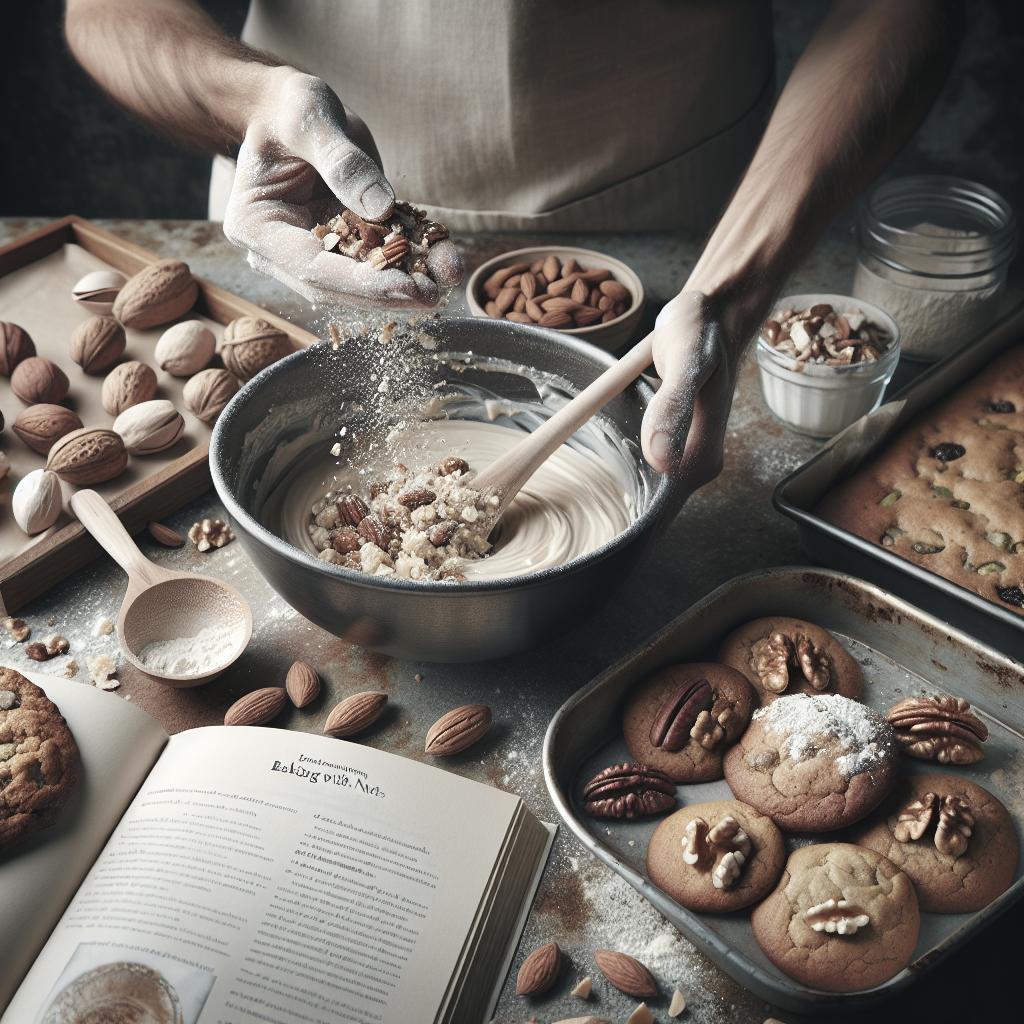
Nuts can add a delightful crunch and burst of flavor to all sorts of baked treats. Whether you’re making cookies, breads, or cakes, nuts can enhance the texture and taste of your baked goods. This article will explore various types of nuts used in baking, whether they can be used interchangeably, and why some recipes recommend toasting them. We’ll also delve into the right way to chop nuts to maintain consistency in your baking and provide tips on how to store them to ensure longevity. Read on to discover how incorporating nuts not only boosts the nutritional value of your confections but also elevates them to a gourmet level.
What kinds of nuts can I use in cookies?
Cookies often call for a variety of nuts that offer unique flavors and textures. Popular choices include walnuts, almonds, pecans, and hazelnuts. Walnuts bring a buttery, slightly bitter taste that pairs well with chocolate chips or oatmeal. Pecans, with their sweet and rich flavor, blend beautifully in sugar cookies and shortbreads.
Almonds are another versatile nut, adding a mild sweetness and crunchy texture to any cookie. They are ideal for incorporating into biscotti or macarons. Hazelnuts offer a distinct, nutty richness that complements spices like cinnamon and nutmeg, making them perfect for autumn flavors. Each nut brings its own distinctive characteristic to cookies, allowing bakers to experiment with taste and texture.
Can nuts be used interchangeably?
While many nuts can be swapped, their unique flavors and textures mean they aren’t always perfect substitutes. For example, walnuts and pecans can often be used interchangeably due to their similar size and mild sweetness, though walnuts have a more intense flavor. They can be used in recipes where the nut isn’t the dominant flavor, such as chocolate chip cookies or brownies.
However, when the nut is a key component, such as in almond biscotti or hazelnut cake, it’s best to use the specific nut called for. The flavors of almonds and hazelnuts are quite distinct and integral to the recipes. Consider the texture, flavor, and moisture content each nut brings to ensure a successful substitution.
Why do recipes call for toasted nuts?
Toasting nuts intensifies their flavor and adds a depth that raw nuts simply don’t have. The heat brings out the natural oils, enhancing the nuttiness and creating a crunchy texture. Whether using walnuts, pecans, or almonds, toasting them beforehand can elevate a simple baked good to an extraordinary level.
In addition to enhancing flavor, toasting can also improve the texture of nuts. The process crisps them up, preventing them from becoming soggy during baking. This is particularly beneficial in recipes where nuts are a prominent feature, ensuring they retain their distinct crunch.
How do I go about chopping nuts?
Chopping nuts can be a meticulous task, but achieving uniform sizes is crucial for even distribution in your baking. Start by choosing a sharp, sturdy knife and use a cutting board to provide stability. For safety, flatten nuts like hazelnuts before chopping to prevent them from rolling.
If precision isn’t a necessity, you can use a food processor. However, be cautious: a few quick pulses should suffice, as over-processing can create a paste. Consistently sized pieces will ensure even baking and prevent some nuts from becoming overly toasted or burnt.
How should nuts be stored?
Correct storage is essential to extend the shelf life of nuts, as their high oil content makes them susceptible to rancidity. Opt for airtight containers, and store them in a cool, dark place like a pantry for immediate use. For longer storage, the refrigerator or freezer is ideal, preventing the growth of mold and helping preserve their flavor.
Ensure nuts are kept away from pungent foods, as they easily absorb surrounding odors. Label containers with the purchase date to keep track of freshness. Regularly check stored nuts for any off-odors before use, discarding any that smell rancid.
Final Thoughts
| Topic | Summary |
|---|---|
| Types of Nuts | Choices include walnuts, almonds, pecans, and hazelnuts, each offering unique flavors and textures. |
| Interchangeability | While some nuts can be substituted, specific flavors or textures may be essential for particular recipes. |
| Toasting Nuts | Toasting enhances flavor and texture, providing a richer, crunchier experience in baked goods. |
| Chopping Nuts | Achieve uniform pieces with a sharp knife or food processor for even distribution in baking. |
| Storage | Store in airtight containers in a cool, dark place; refrigerate or freeze for extended freshness. |
“`
